
‘Don’t See Me as BNP’ — Then in What Capacity Is the Health Minister Serving in a BNP Government?
Disowning party identity behind a freedom fighter’s credentials? The minister’s remarks raise uncomfortable questions
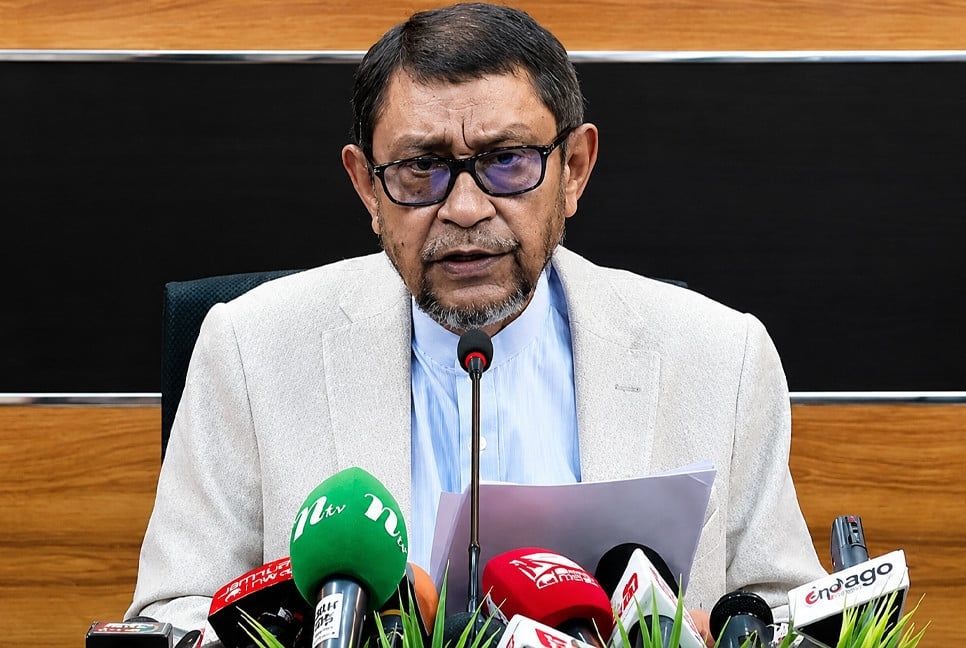
A statement by Health Minister Sardar Md. Sakhawat Hossain has become politically quite significant. Speaking at an event of the Bangladesh Midwifery Society on 6 July, he said, “Don’t treat me as BNP. See me as a human being. I am a freedom fighter.”
The question now is how far this remark can be dismissed as a mere emotional outburst. He is not an ordinary citizen; he is a minister in a political government, and that government’s political identity is BNP.
The question, then, is a simple one: if a minister in a BNP government does not want to be known as BNP, in what capacity exactly does he sit in the cabinet?
Is the BNP Identity That Embarrassing?
The minister certainly has the right to present himself as a freedom fighter. His wartime memories of 1971 are also an important chapter of his personal life. But the problem lies in the second half of his statement: “Don’t treat me as BNP.”
In politics, party identity is nothing to be ashamed of. On the contrary, it is through their party identity that a political worker or a minister remains politically accountable to the public.
The BNP has no shortage of freedom fighters. The party presents its founder, Ziaur Rahman, as a significant figure in the history of the Liberation War, and many of its leaders and activists were involved in the war. Why, then, would a minister foreground his freedom fighter identity in a way that suggests the BNP identity is somehow less honorable for him? Is that fair to the party?
Others’ Liberation War, and His Own Apart?
The minister’s speech included a lengthy account of his own wartime memories — his mother’s tears, nine months of separation, the decision to fight for the country. These are undoubtedly emotional memories.
But Bangladesh’s Liberation War is not the story of any one individual’s achievement. Millions sacrificed their lives, families, security, and futures. Countless freedom fighters became part of that history without any publicity.
So when a minister sets his freedom fighter identity against his party identity, the question arises: is this an expression of self-respect, or an attempt to distance himself from his political identity?
Power Through the Party, Identity Without It?
More striking still, in the same speech the minister praised the political roles of Ziaur Rahman and Khaleda Zia. In other words, he acknowledges the party’s history and the political legacy of its leadership, yet when it comes to himself, he asks not to be regarded as BNP.
This dual position raises the biggest question of all.
The identity of the party’s founder is a source of pride; so is the identity of its leadership. Why, then, the need to avoid the party identity in his own case?
A minister could have said that, although he belongs to a BNP government, he will treat everyone equally in discharging state responsibilities, regardless of party or opinion. That would have been a responsible statement.
But the sentence “Don’t see me as BNP” conveys a different message, as though the minister wishes to keep himself away from his own political identity.
The Questions Are for the Minister
Being a freedom fighter is an honor. But there is no need to use that honor to diminish one’s party identity — especially when it is on the strength of that very party identity that a person comes to head an important ministry of the state.
So the questions remain:
Why object to being known as BNP when serving as a BNP minister?
Why the need to highlight his freedom fighter identity separately from the party’s other freedom fighters?
And the biggest question: by avoiding the identity of the party whose government he serves in, on a public stage, whom is he actually sending a message to?