‘A Little Less Praise’ PM Cuts Short Minister’s Adulation
Health Minister’s excessive praise at UHFPO conference creates an awkward moment
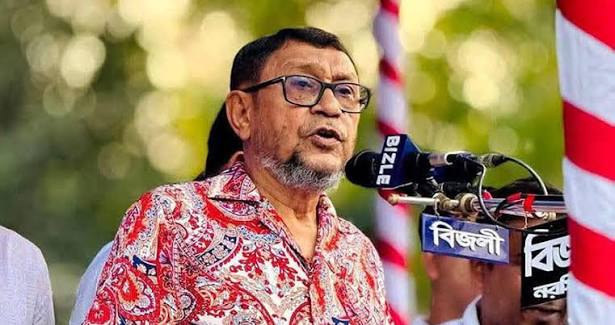
The conference of Upazila Health and Family Planning Officers (UHFPO) was convened to discuss field-level problems in the health sector, the crises facing upazila health complexes, and the state of healthcare for ordinary citizens. Yet it was a portion of the Health Minister’s speech that ended up dominating the discussion at the very conference meant to address these issues. While praising Prime Minister Tareq Rahman, the chief guest, the Health Minister at one point drifted into excessive flattery. The situation reached such a point that the Prime Minister himself finally took the microphone and stopped the minister mid-speech. Smiling, he said, “Minister, a little less praise, please.”
The incident took place on 18 April 2026 at the UHFPO conference held at Osmani Memorial Auditorium in the capital.
While delivering his speech at the event, the Health Minister launched into praise of Prime Minister Tareq Rahman’s leadership, achievements, and various initiatives. At one point, the level of praise grew so pronounced that the Prime Minister felt compelled to intervene himself. Addressing the minister, his brief remark was: “Minister, a little less praise, please.”
The Prime Minister’s witty remark drew laughter from the audience at the venue. The moment subsequently sparked widespread discussion on social media and within political circles.
An Overabundance of Personal Flattery at a Health Conference
The central purpose of the UHFPO conference was meant to be an honest assessment of healthcare conditions at the upazila level. Healthcare in the country’s remote areas depends heavily on upazila health complexes and the officials who run them. Shortages of doctors and staff, gaps in medicine supply, inadequate medical equipment, patient overload, emergency care deficiencies, and infrastructural limitations are everyday realities of field-level health management.
Yet at this crucial conference, a significant portion of the Health Minister’s remarks were devoted instead to praising the Prime Minister. And it was amid this flow of praise that the Prime Minister himself uttered the words: “A little less praise, please.”
The episode did not merely amuse those present at the event; it also raised broader questions about how excessive praise and flattery in ministers’ speeches at official functions should be considered acceptable.
Criticism Over a Culture of Sycophancy
Excessive praise of ministers and political leaders in the presence of ruling political leadership is nothing new in Bangladesh’s political culture. On various occasions, official events and political gatherings have drawn criticism for excessive glorification of top leadership.
According to critics, this tendency often allows personal flattery to overshadow substantive policy discussion and real problems. Particularly at conferences organized for government officials, where direct discussion of sector-specific problems, limitations, and solutions is expected, allowing political praise to dominate weakens discussion that serves the public interest.
The matter carries even greater weight in the health sector, since every decision in this field is directly tied to people’s lives and access to treatment. Vacant doctor positions at the upazila level, unavailability of essential medicines, lack of diagnostic facilities, or crises in emergency care are the problems that matter most to field-level officials, and finding solutions to them takes precedence over everything else.
If personal praise takes center stage in a minister’s remarks in that context, a natural question arises: is the central subject of a health conference genuinely healthcare, or is it praise for political leadership?
A Single Sentence from the PM Halted the Flattery
The most talked-about aspect of the incident is the Prime Minister’s immediate response. It is not unusual for a chief guest to be thanked and praised at government functions. But here, the Prime Minister’s own intervention over the degree of praise set the incident apart.
“Minister, a little less praise, please- just a handful of words. Yet those very words became one of the most discussed moments of the event.
Many in political circles have viewed this as the Prime Minister’s light-hearted joke. Others believe it also carried a message about the culture of excessive personal flattery at government functions.
Whichever interpretation one accepts, the scene itself is clear: while the Health Minister was absorbed in praising the Prime Minister, it was the Prime Minister himself who stopped him.
Questions Also Raised Over the Tenor of Ministers’ Speeches
What do ordinary citizens fundamentally expect from a government minister? Identifying the problems within their ministry, presenting the real situation on the ground, explaining the causes of shortcomings, and outlining a path to solutions—these are the core expectations.
The Health Ministry should be no exception. When discussions with field-level officials turn to problems in the country’s health system, matters such as hospital management, shortages of doctors and nurses, gaps in medicine and equipment, patient overload, the working conditions of health workers, and the quality of service are expected to take priority.
In that context, how necessary and how appropriate praise for the Prime Minister ought to be is now the question at the center of the discussion.
‘A Little Less Praise’ Leaves Behind a Larger Question
That moment at the 18 April UHFPO conference has now reignited debate over the culture of political praise at government functions. The Prime Minister’s own remark, “a little less praise, please”—was therefore not confined merely to a lighthearted moment.
Instead, it has brought to the fore a fundamental question about government functions: how much space should be devoted to praising those at the center of power, and how much to discussing the genuine problems of the people?
In a public-service sector as vital as health, where people’s treatment, lives, and wellbeing are directly at stake, accountability, honest discussion of real problems, and the search for solutions ought to matter more than praise—this is the natural expectation.
It is from that expectation that the events of 18 April have become a subject of widespread discussion. When a minister keeps advancing further into praise of the Prime Minister, and the Prime Minister himself says, “Minister, a little less praise, please”—the moment is not confined to simple humor; it also raises a significant question about the priority given, at official functions, to political flattery versus discussion in the public interest.