Advice on Lungis Ends the Answer: Why Was the Health Minister’s Reply on Dengue Incomplete?
Mosquito nets, full-sleeve shirts, and long pyjamas or lungis were recommended; specifics on mosquito control and medical care were not
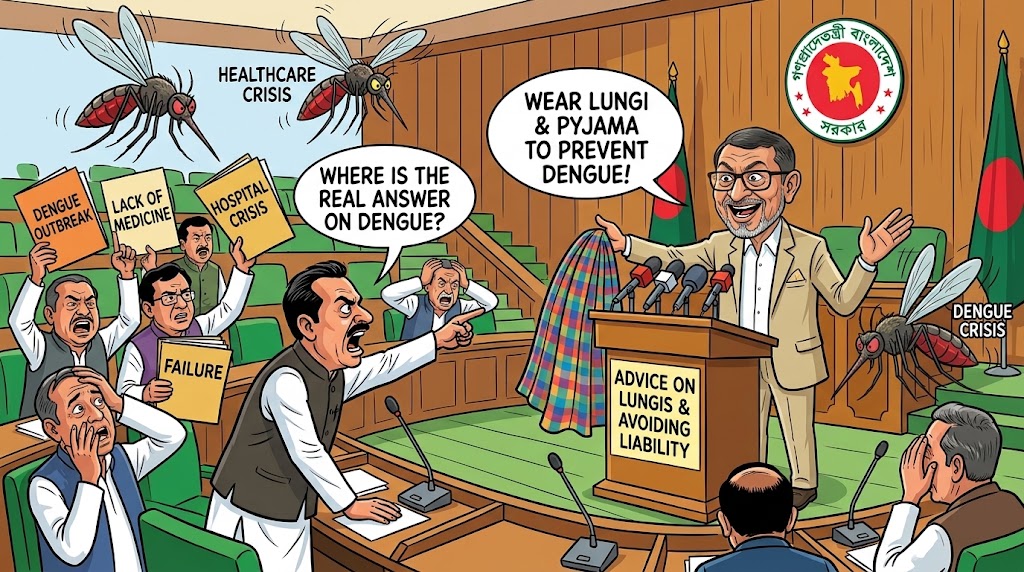
As dengue spread, people wanted effective prevention and assurance of treatment. What they heard in the Jatiya Sangsad was something else. Health Minister Sardar Md. Sakhawat Hossain advised citizens to sleep under mosquito nets and to wear full-sleeve shirts and long pyjamas or lungis. The remarks, made on 15 July in reply to a notice on a matter of urgent public importance, offered a list of personal precautions. They gave no clear account of how far the government itself is meeting its own responsibilities.
Advice Given, Accounting Missing
Mosquito control, coordinated preparedness and patient management are primarily the government’s responsibility. Yet the largest share of the minister’s reply went to urging people to be careful. Which areas have anti-mosquito drives under way, how far the destruction of breeding sites has progressed, what surveillance has found, and how services will be ensured if patient numbers rise: the reply offered no specific answers to any of these.
Directive Issued, Implementation Where?
In the same reply, the minister said private medical college hospitals had been directed to reserve 10 per cent of beds for dengue patients and to conduct tests at government-set rates. The step is important, but issuing a directive and seeing results on the ground are not the same thing. Whether the directive is being followed, who is monitoring it, and what action will follow violations have not been made public. Without evidence of implementation, the announcement risks being little more than a promise on paper.
Half of the WHO’s Advice
World Health Organization guidance does mention full-sleeve clothing as a way to avoid mosquito bites, so the minister’s advice is not entirely without merit. But the same guidance also stresses removing stagnant water, covering and regularly cleaning water containers, using mosquito repellent and reducing breeding sites. A large part of this is impossible without government action. If the clothing advice is brought forward while the rest is passed over in silence, the question arises: on whose shoulders is the burden really being placed?
Where the Debate Is Heading
In a public health crisis, a minister’s words should be fact-based and clear about what needs to be done. But an example such as how long a lungi should be can easily take over the discussion, and the account of policy action gets buried. Many may criticise such a statement as trivial or inadequate to the situation. That is an assessment of the statement’s impact, not a personal attack.
What the Public Wants
Nobody disputes that citizens need to be cautious. But mosquito control and ensuring medical care are the government’s burden. From the minister, therefore, the public expects more than an appeal for awareness:
- A realistic action plan with timelines
- Regular and public information on progress
- Accountability in cases of failure
Advice on clothing does not discharge responsibility. In this dengue season, people want to see how effective a role the government is playing in reducing mosquito sources and standing by those who have fallen ill.