Minister’s Kalkini Show: Four Nurses Pay for a Supply Failure They Did Not Cause
The saline was missing. The investigation was missing. The accountability was missing. The only thing that arrived on time at Kalkini Upazila Health Complex was punishment, and it landed on the nurses.
During a surprise visit by the Health and Family Welfare Minister to the Madaripur hospital on Tuesday, November 3, patients and relatives complained verbally that they had not received saline from hospital supplies. According to the National Nurses Forum (NNF), four nursing officers providing care there were then transferred on the strength of those verbal complaints alone. The NNF says there was no show-cause notice and no inquiry.
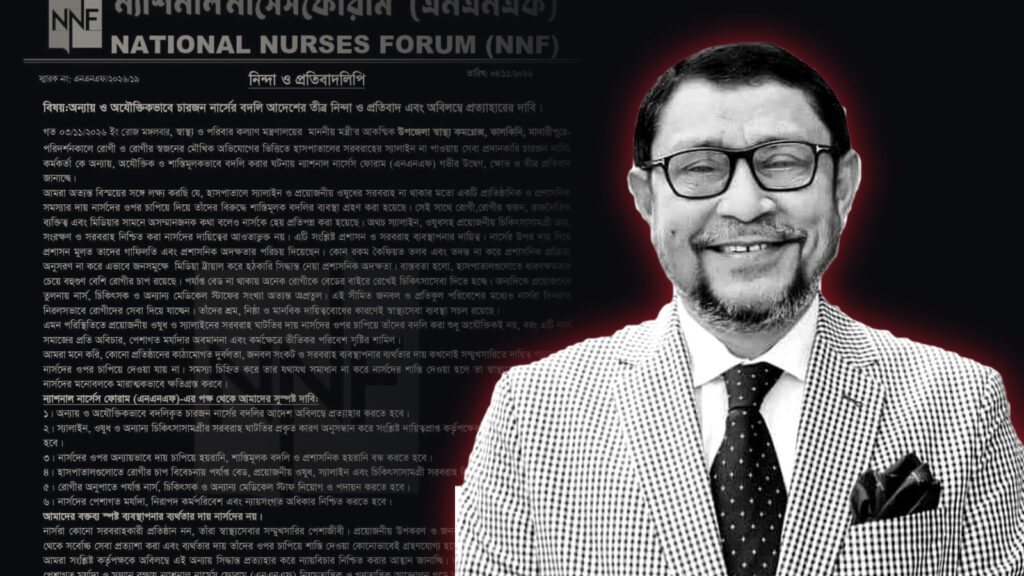
In a protest statement issued on November 4, the forum condemned the transfers as unjust, irrational and punitive, and demanded their immediate withdrawal.
The logic behind the move collapses under the simplest question: since when do nurses buy saline? Procuring, storing and supplying medicine and medical goods is not part of a nurse’s job, the NNF points out. It belongs to the administration and to supply management. Yet the only action the forum reports is against the people at the bedside, who have been shipped out.
That is not reform. It is scapegoating with an audience. The NNF alleges that nurses were also spoken to disrespectfully and humiliated in front of patients, relatives, political figures, and the media. It calls the episode a “media trial” and a hasty decision that exposes administrative incompetence. By shifting the blame onto nurses, the forum says, the administration has only revealed its own negligence.
The minister owes the public an explanation. What exactly did this visit achieve? A surprise inspection, a crowd, cameras and an instant verdict make for dramatic coverage. They do not put a single bag of saline on a ward. If the aim was to fix the shortage, why was its cause not traced first? If the aim was to look tough in front of the press, then four nursing officers have been used as props in a public performance.
Such impulsive decisions are doing the health sector more harm than good. The forum warns that they create a climate of fear at work and will seriously damage morale. Staff who fear being blamed for shortages they cannot control have every reason to keep quiet, and a system that silences its frontline workers will only hide its failures for longer.
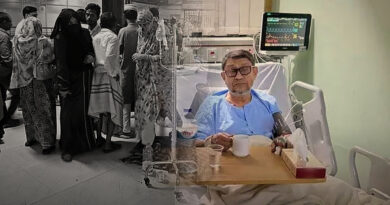
The reality on the ground makes the punishment harder still to defend. According to the NNF, hospitals are carrying patient loads many times their capacity, many patients are treated outside beds, and nurses, doctors and other medical staff are severely short in number. Nurses are holding this strained system together day and night. Their reward, it seems, is public disgrace.
The forum has issued six demands, including withdrawal of the transfers, an inquiry into the real cause of the shortage, accountability for those responsible, an end to harassment, adequate beds and supplies, and staffing matched to patient numbers. Convener Dr Md Yunus Ali and member secretary Aminul Islam (Mamun) warned that the forum will be compelled to build a constitutional and democratic movement if the decision stands.
Their message is blunt: the failure of management is not the fault of nurses. The minister should stop hunting for headlines and start answering for the ministry’s supply chain.