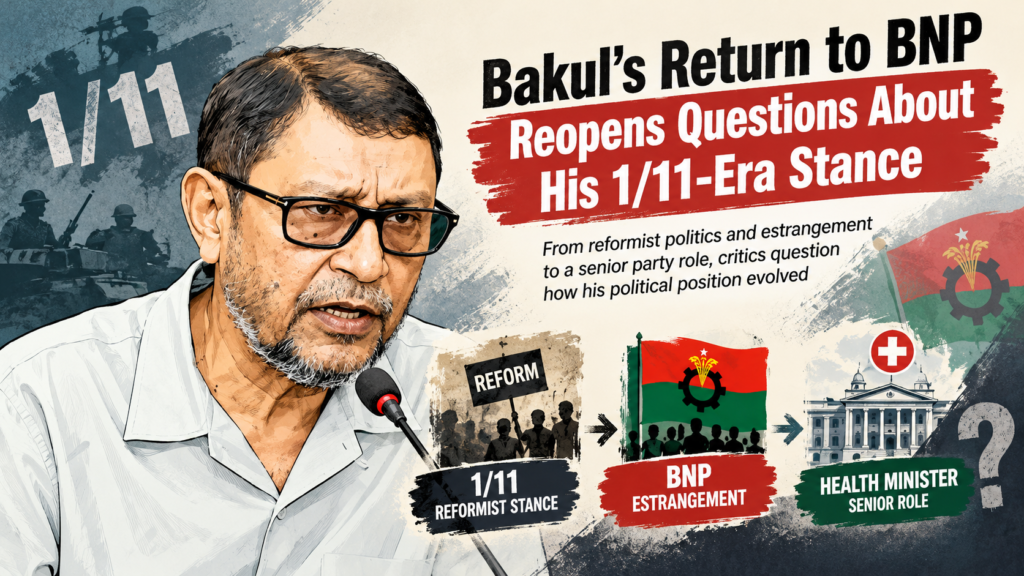
Bakul’s Return to BNP Reopens Questions About His 1/11-Era Stance
From reformist politics and estrangement to a senior party role, critics question how his political position evolved
The political upheaval surrounding 1/11 in 2007 reshaped more than the balance of power in Bangladesh. It also sharpened disputes within the country’s two largest parties over leadership, reform and political direction. Political circles have discussed whether Sardar Shakawat Hossain Bakul aligned himself with the reform-minded faction that emerged within BNP at the time. Now serving as health minister, he has again drawn attention to that period.
After 1/11, BNP leaders who broke with the party’s top leadership and called for reform faced intense controversy. Bakul has been linked to that group in allegations about his political past. Accounts of the period also point to distance between him and the party’s mainstream leadership, as well as resentment among some grassroots activists over his position.
Reform Politics and a Break with the BNP Mainstream
During the political crisis of 2007–08, some leaders challenged the authority of Khaleda Zia and Tarique Rahman, then leading the BNP, and adopted a pro-reform position. The claim that Bakul was associated with that faction remains one of the most discussed episodes in his political career.
Critics say the fallout was significant: his distance from the BNP mainstream grew, and at one point he was pushed out of party politics. Political discussion in Narsingdi also describes a sharp local backlash. Some reports say his effigy was burned and that he was called a “traitor.”
A Return After Years Apart
The later course of his career raises a further question. The estrangement that had separated Bakul from BNP’s mainstream did not last indefinitely. After a lengthy period away from active politics, he returned to BNP and later rose within the party’s organisational structure.
This trajectory has prompted critics to describe him as an “opportunist.” They argue that taking a position during a difficult period, becoming isolated from the party’s mainstream, and later returning to a senior role as circumstances changed raises questions about consistency.
Bakul’s supporters could describe the return as reconciliation within the party or an adjustment to a changed political landscape. “Opportunist” is therefore a political judgment, not a fact. Assessing the episode would require checking Bakul’s own statements from that time, formal party decisions, and the documented process through which he rejoined BNP.
His 1/11 Position and His Current Political Standing
One of the most discussed tensions in Bakul’s political history is the contrast between his reported pro-reform stance against BNP’s established leadership during 1/11 and his later return to the same party, where he gradually attained an important position.
Political positions can change with circumstances, party dynamics and the passage of time. In Bakul’s case, however, his current position gives the 1/11 episode renewed relevance. His reported break with the BNP mainstream and his later rise within the party have prompted questions about the path between those two points.
For a politician who now holds the health portfolio, the 1/11 period is more than a distant chapter. His stance then, the political isolation that followed, and his eventual return to BNP form part of the context for his career. The question remains whether the shift reflected a change in political conviction or an adaptation to new realities.
Answering that requires weighing Bakul’s own comments against party documents from the period and contemporaneous news reports. Those sources can help establish what remained consistent—and what changed—between his 1/11-era politics and his position as health minister today.