Bakul’s Political Ties and Local Influence Draw Scrutiny in Monohardi-Belabo
Questions span past Awami League connections, BNP disputes and allegations involving local business and associates; claims remain subject to verification
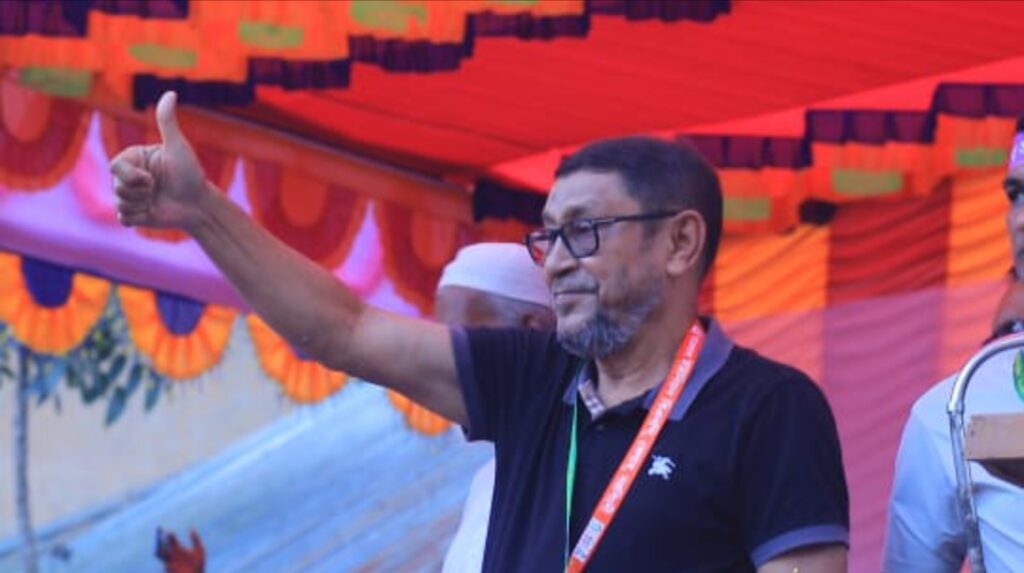
Sardar Sakhawat Hossain Bakul has long been a prominent figure in the politics of Monohardi-Belabo in Narsingdi. Now health and family welfare minister and a senior BNP leader, he is also the subject of discussion about his earlier links with influential Awami League figures. His family and political relationship with former Industries Minister Nurul Majid Mahmud Humayun has been a longstanding topic in local politics.
Kinship and Political Influence
Local political circles describe the relationship between Bakul and Nurul Majid Mahmud Humayun as more than a political connection, saying the two are relatives and maintained close contact during the Awami League government. Local accounts say Bakul had close ties with the party’s power centres at the time and retained political and administrative influence in the area. He is also accused of using that influence to strengthen his political and economic position.
Awami League Links in the Family
Discussion of Awami League connections also includes members of Bakul’s family. His daughter’s father-in-law is former Awami League Chief Whip ASM Feroz. His elder sister’s son, Fakhrul Mannan Mukto, served as president of Chalakchar Union Awami League and as chairman of the Union Parishad. His elder brother, Moazzem Hossain Bulbul, also openly campaigned for an Awami League candidate in the 2024 national election, according to the report.
Alleged Contacts After the Government Fell
Local political allegations say communication between Bakul and some Awami League leaders and activists continued after the government fell. Some local residents claim he coordinated behind the scenes on behalf of leaders facing cases or administrative pressure. The report says the picture could be clarified by checking the relevant cases, administrative records and communications involving those named.
Disputes Within the BNP
Bakul’s political history has also been contested within the BNP. Tofazzal Hossain Master, senior joint convener of Narsingdi District BNP, alleged: “During the One-Eleven period, Bakul made objectionable comments about Begum Khaleda Zia and Tarique Rahman. He said—‘A spoiled son of a spoiled mother.’ Despite being a leader, he caused extreme damage to the party.”
Local political allegations also say Bakul was once a follower of BNP leader Mannan Bhuiyan and later played a role in divisions within the party.
Allegations Involving Sand, Soil and Extortion
Alongside discussion of Bakul’s political ties, there are local allegations about economic influence in Monohardi-Belabo. For years, claims have circulated that people close to him were involved in extracting river sand and soil in the area. Local claims also put the value of large-scale sand and soil extraction after August 5 at about Tk 50 crore.
There are also allegations that Bakul’s followers collected extortion from markets, CNG stations and brick kilns. Some local political activists say a sphere of influence was built using the BNP’s political identity.
Questions Now at the Centre of Discussion
The debate over the current health minister’s role in local politics focuses on his relationships and the use of influence. Questions raised locally include:
- What was his relationship with influential circles during the Awami League government?
- How did those ties affect his political position?
- Did any part of those contacts continue after the change of government?
- How much influence does he currently have over local administration and economic activity?
In examining a sitting minister’s political past and present influence, personal relationships, political positions and allegations should be considered separately. Documents should be assessed where available, and people concerned should have an opportunity to respond to allegations.
The extent of Bakul’s influence in Monohardi-Belabo will ultimately need to be assessed through his past actions, documented relationships and verifiable evidence about the use of power—not political identity alone.