
Survival Gains, Out of Reach: Why Advanced HDF Dialysis Remains a Privilege in Bangladesh
Hemodiafiltration (HDF), an advanced blood-cleansing technique for kidney failure, is drawing attention worldwide after a major European study found about 23 percent lower mortality than with conventional high-flux dialysis. In Bangladesh, however, it is offered at only a handful of specialised private hospitals in Dhaka. High costs, inadequate water purification, staff shortages, and late fistula creation keep it beyond the reach of most patients.
For people whose kidneys have failed, dialysis is the main way to remove waste and excess fluid from the body. Thousands of patients in Bangladesh have long relied on conventional hemodialysis (HD). Medical advances have since produced a more sophisticated option, hemodiafiltration (HDF). Research points to its potential clinical benefits, but access in Bangladesh remains limited. The technology exists in the country, yet a lack of money and infrastructure keeps it out of reach for most patients.
What makes HDF different
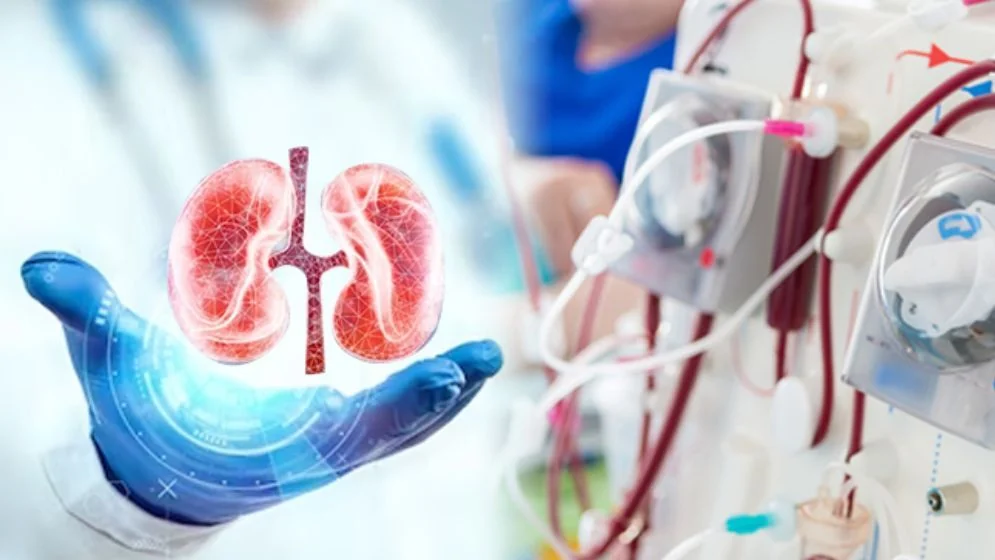
Conventional hemodialysis mainly uses diffusion to remove small waste molecules from the blood. HDF combines diffusion with convection, which improves the removal of some larger, middle-sized harmful molecules such as beta-2 microglobulin.
Blood is filtered through a high-flux dialyzer while ultrapure substitution fluid is infused into the bloodstream. In online HDF, the machine prepares this fluid itself under strict quality control. For suitable patients, the method can help clear middle-sized toxins. In some cases, it may also keep blood pressure more stable during treatment and reduce discomfort afterwards. The benefits, however, are not guaranteed for every patient.
Evidence of lower mortality
The key study, known as CONVINCE, was published in The New England Journal of Medicine in 2023. It involved 1,360 patients at 61 centres in eight European countries.
After about 30 months of follow-up, mortality was 21.9 percent among patients on conventional high-flux dialysis and 17.3 percent among those on high-dose HDF, a relative reduction of roughly 23 percent.
The findings have renewed interest in HDF, but they cannot be applied directly to every kidney patient in Bangladesh. A patient’s condition, treatment type, dialysis dose, and the available infrastructure all determine whether HDF is appropriate.
Limited access to dialysis itself
According to a study by the Bangladesh Institute of Development Studies (BIDS), about 800,000 people with kidney failure in Bangladesh need dialysis, yet only around 30,000 receive it regularly.
The same study found that 92.87 percent of households with a dialysis patient face severe financial hardship. Unable to afford treatment, about 19.5 percent of patients take fewer sessions than prescribed, and many are forced to stop within a few months.
A conventional dialysis session costs roughly Tk 400 to Tk 1,000 at government hospitals and up to several thousand taka at private facilities. When so many families struggle to sustain basic dialysis, the costlier HDF is effectively unattainable for most.
Why HDF remains out of reach
Cost is the first barrier. HDF requires special dialyzers, substitution fluid, and various imported supplies, making each session more expensive than conventional hemodialysis. Over long-term treatment, the extra cost places a heavy burden on patients and their families.
The second barrier is water quality. In online HDF, fluid enters the bloodstream directly, so it must be exceptionally pure. That requires a double reverse osmosis (Double RO) system, regular testing, and strict quality control. It is unclear how many dialysis centres in the country meet that standard.
The third is equipment. Not every hemodialysis machine can perform HDF; the treatment needs HDF-capable machines, suitable dialyzers, and specific technical support. The International Society of Nephrology (ISN) estimates that Bangladesh has only 0.63 hemodialysis centres per million people. Shortages of trained nephrologists and dialysis technicians add to the problem.
The fistula factor
Vascular access is another critical factor. An editorial analysis of the CONVINCE trial noted that the benefits of HDF were seen mainly in patients with a permanent arteriovenous (AV) fistula.
A fistula is a surgically created connection between an artery and a vein in the arm. It increases blood flow and makes dialysis easier. Because high-dose HDF requires higher blood flow, an effective fistula is essential.
The situation in Bangladesh is worrying. A 2022 study at BIRDEM found that 91.6 percent of patients started dialysis through a temporary catheter. Installing HDF machines alone will not be enough. Timely fistula creation after diagnosis, patient awareness, and access to the necessary surgery must also be ensured.
What policy needs to change
Most kidney care in Bangladesh is still paid for out of pocket, and long-term dialysis pushes many families into financial crisis. Expanding advanced treatments such as HDF will require well-planned government action.
The feasibility of gradually introducing HDF-capable machines and ultrapure water systems in major public hospitals should be assessed. Costs could be lowered through local or bulk procurement of supplies. Specialised training for nephrologists and technicians, along with routine quality control, is also needed.
Public-private subsidies, targeted support for low-income patients, and bringing kidney care under health insurance deserve attention, as do prompt treatment after diagnosis and timely fistula creation.
For a kidney patient, dialysis is not a luxury but a means of survival. When even conventional dialysis is hard for most to sustain, confining advanced treatment to a few institutions exposes a deeper inequality in healthcare.
The real question is not whether HDF exists in Bangladesh, but whether life-saving modern treatment will remain available only to those who can afford it.