
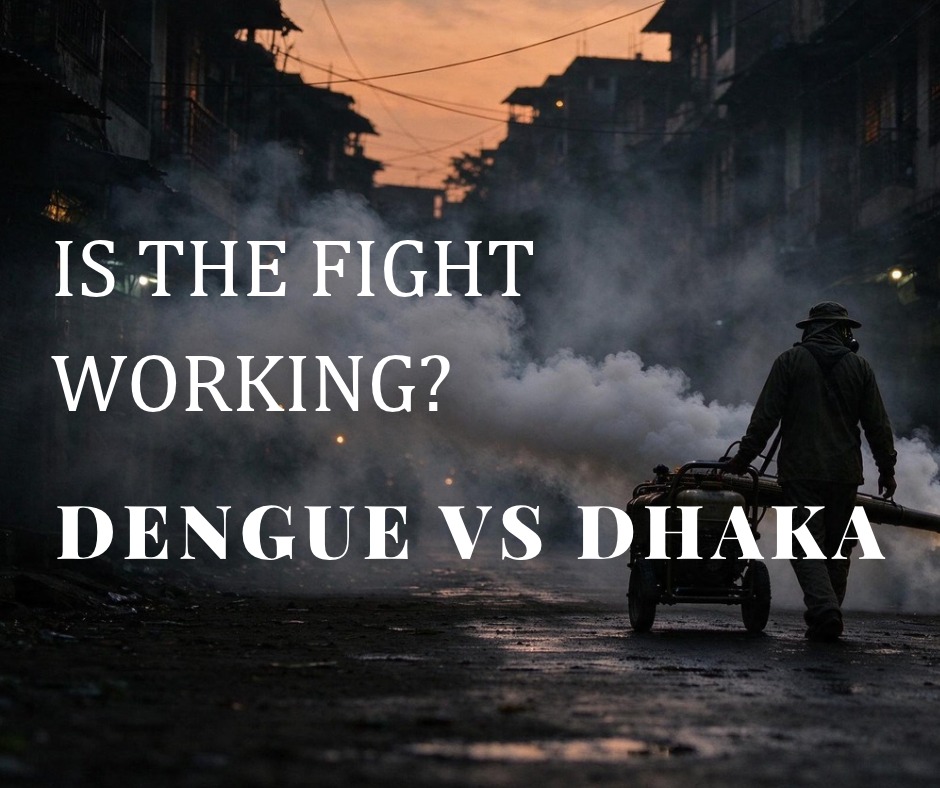
Mosquitoes Survive, People Don’t: Is Dhaka Fighting Dengue With Kerosene?
502 dead, Tk 48 crore paid out, and a supplier who says the cut on every cheque “isn’t a bribe.” Dhaka South says it knows nothing.
Three more names were added to Bangladesh’s dengue register on Monday morning: two in Dhaka division, one in Khulna. With them, the 2026 death toll reached 502. In the same 24 hours, another 1,598 people were admitted to hospital.
Put that figure next to another, Tk 48 crore, and a simple question arises. Is the insecticide Dhaka buys to kill mosquitoes actually killing them?
The numbers that should alarm everyone
- 502 deaths so far this year, against 413 in all of 2025
- 164,107 hospital admissions this year; 5,617 patients still under treatment
- 673 new admissions in Dhaka division alone in a single day
- The third-deadliest dengue year on record, behind only 2023 (1,705) and 2024 (575), with six weeks still to go
A blacklist that stops at the city line
According to an investigation by Somoy Sangbad, Dhaka South City Corporation (DSCC) has awarded three work orders worth about Tk 48 crore over two years to a supplier group whose earlier firm, The Limit Agro, was blacklisted by Dhaka North in 2019 over adulterated insecticide and alleged embezzlement. The same firm’s supplies in 2011 were allegedly 95 percent adulterated.
The report alleges the group simply reopened as Forward International and carried on. If a new name is all it takes to wipe the slate clean, the blacklist is not a safeguard. It is a formality.
“Not a bribe”
The man said to lead the group, identified as Mizan, reportedly told the outlet that everyone from peons to accounts staff gets paid, with a fixed percentage on every cheque. In his words, that is not a bribe. He also credited the business with lifting him from office peon to owner of several companies, and, according to the outlet, offered its reporters money to make the story go away.
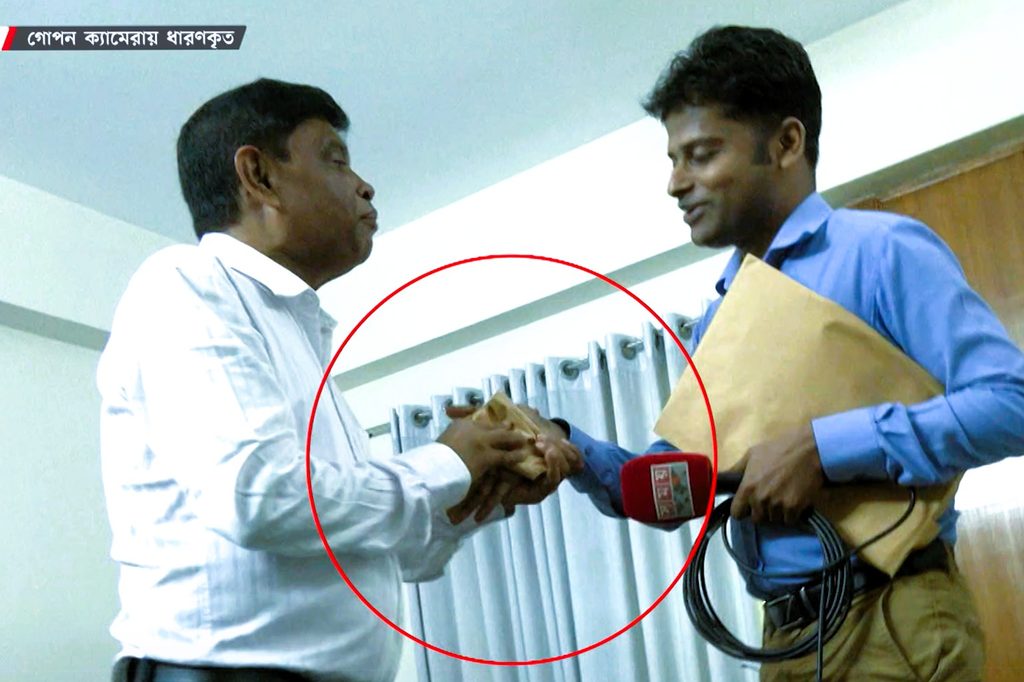
Then there is Giash Uddin, storekeeper at the Dhaka Mosquito Control Office, the body that arranges insecticide testing. He told the outlet that real insecticide is used for the test, and kerosene is supplied afterwards. If he is right, the quality check is theatre: the product passes on paper while Aedes mosquitoes thrive in the drains.
Ignorance as policy
DSCC’s chief store officer, Joynul Abedin, says the corporation has no information about the blacklisting, that everything is tested, and that suppliers are picked on quality alone. That leaves three questions that someone in authority must answer:
1. Why does one city corporation not know who the other has blacklisted before handing out Tk 48 crore?
2. Who independently checks that the insecticide sprayed in the field is the same as the sample that was tested?
3. Why has the Anti-Corruption Commission not acted after the accused himself described paying a percentage on every cheque?
Citizens can empty their flowerpots. They cannot audit City Hall.
Experts rightly tell people to destroy breeding sites and see a doctor quickly when fever strikes. But no household can do anything about what goes into City Hall’s storeroom.
None of these allegations has been proven, and the link between contracts and deaths is for investigators to establish. But refusing to investigate sends its own message: that a percentage on a cheque matters more than 502 lives.