Axes in the Clinics, Silence in the Ministry: Extortion Gangs Hold Khulna’s Healthcare Hostage
Four health facilities attacked in a month; patients flee in terror, victims too scared to file cases, and the Health Minister is nowhere to be seen
Seeking medical care in Khulna has become an act of courage. In the space of a single month, four health facilities in the divisional city have reportedly been attacked, vandalised, and hit with extortion demands and death threats. Yet the Ministry of Health, the body charged with protecting the country’s healthcare system, has shown no visible response.
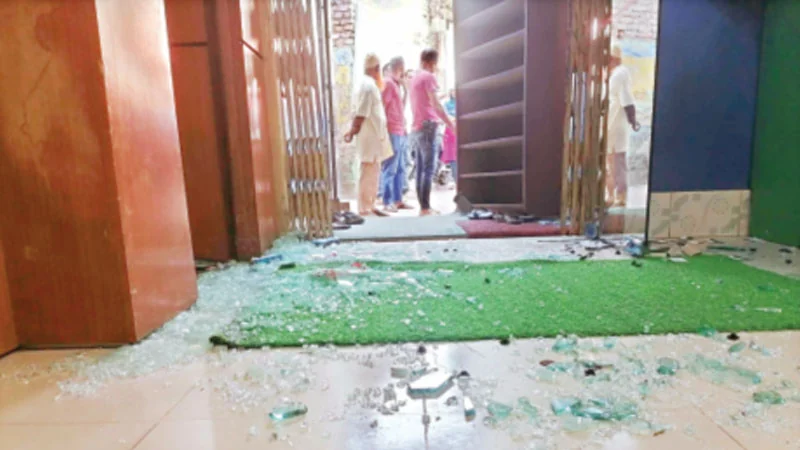
The latest attack came on Saturday afternoon on Khan Jahan Ali Road. Five young men armed with Chinese axes stormed New Apollo Diagnostic and Consultation Centre in broad daylight, smashing air conditioners, a television, glass doors and the reception counter. Patients who had come for treatment ran for their lives.
A pattern, not an accident
The New Apollo attack is no isolated crime. City Queens Clinic, Sandhani Clinic, Rongdhonu Clinic and Abdullah Pathology have all faced attacks, vandalism, extortion demands and assaults on their staff, according to allegations. In one incident, shots were fired into the air. The same city, the same method, again and again, and still the attackers walk free.
Fear keeps victims silent
According to police, victims did not file cases in most of the incidents. Only in the Sandhani Clinic case, where bullet casings were recovered, did police file a case themselves and arrest three people. There has been no progress on arrests in the other cases. When victims are too frightened to seek justice and attackers face no consequences, emboldened criminals are the inevitable result.
News reports have linked the attacks to notorious criminal Nur Azim and his followers, who face allegations of extortion and vandalism at several establishments. These allegations have not yet been proven in court.
Wrong priorities?
At a moment like this, hospital security, a safe working environment for doctors and the protection of patients should sit at the very top of the Health Minister’s agenda. Instead, critics say, the talk around the minister’s inspections and administrative activity has centred on the transfer and posting of doctors and nurses. Transfers and postings are a legitimate part of the ministry’s work. But when armed men can walk into a health facility and wreck it in front of patients, shouldn’t securing that facility come first?
Questions are also being raised over whether a share of the extortion money flows to political or otherwise influential quarters. Some critics have even questioned the role of responsible officials in the Health Ministry. An impartial investigation into these allegations, into any political patronage the offenders enjoy, and into administrative inaction is urgently needed.
If clinic owners, doctors and staff in a divisional city like Khulna live in fear of extortionists, the safety of healthcare in remote areas is anyone’s guess. Healthcare is not a marketplace for extortionists; it is a matter of people’s right to survive. The Ministry of Health cannot escape responsibility for failing to protect it.