
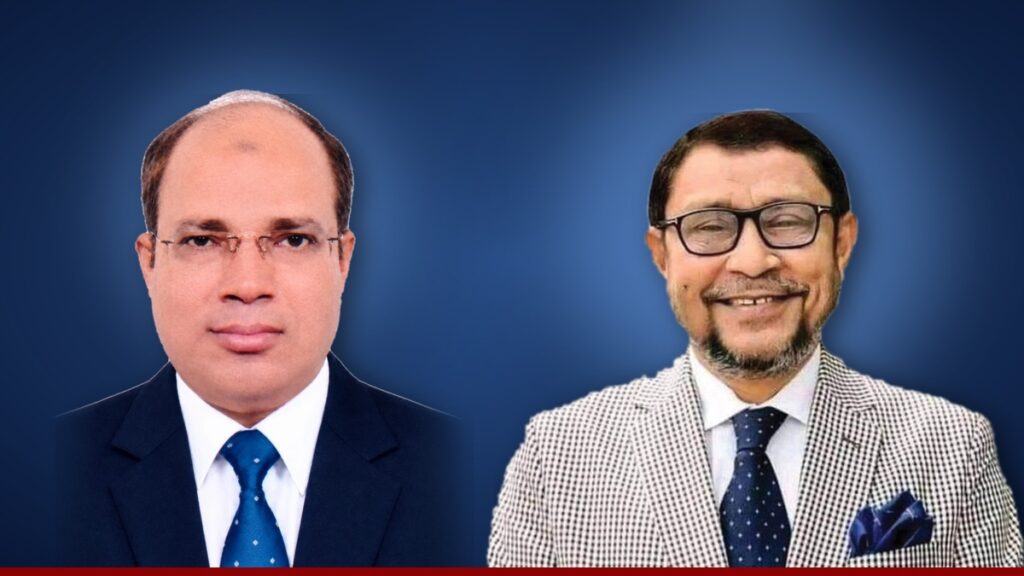
The Health Minister’s right-hand man is Md. Mustafizur Rahman, Joint Secretary (Personnel) in his own ministry
A syndicate built around the joint secretary in charge of personnel is allegedly selling transfers, and the biggest buyers are officials who grew rich under the Awami League
A transfer outside Dhaka costs Tk 5 lakh. One to the outskirts of the capital costs Tk 10 lakh. A posting inside Dhaka goes for Tk 15 lakh and for the most coveted positions, Tk 20 lakh or more.
That, according to multiple sources familiar with the health ministry, is the unofficial price list now governing the transfer and posting of health officials, a trade they say is worth crores of taka.
The sources allege the rates were set by Md. Mustafizur Rahman, joint secretary in charge of the ministry’s personnel wing, who is widely known inside the ministry as the “right hand” of Health Minister Sardar Md. Sakhawat Hossain Bakul. A syndicate has formed around Rahman under the minister’s patronage, they say.
Because the personnel wing handles recruitment, transfers and promotions, nothing moves without Rahman’s consent, according to people familiar with its workings. Each posting reportedly fetches between Tk 5 lakh and Tk 15 lakh, depending on location and the importance of the post.
In principle, postings are supposed to be decided on administrative need, experience and performance. In practice, the sources allege, the deciding factor has become how much an official can pay.
Old syndicates, new alignment
The allegations suggest little has changed in the health sector since the Awami League was in power. Syndicates that thrived under the previous government have, sources say, “realigned” themselves under the BNP government. The difference is that these networks now operate under a single, powerful ministry-centred circle.
The officials able to pay such sums are largely those who amassed vast wealth through illicit means during the Awami League era, a period critics describe as “fascist,” the sources allege. They have money, know how to work corruption schemes, have the nerve to do so, and know how to “manage” every quarter that matters. That, sources say, has made them the preferred choice of the sector’s current policymakers, while officials without such funds are left behind.
Postings revoked after scandal
Placing such officials in lucrative positions in exchange for money has repeatedly backfired. In several cases, the ministry has been forced to cancel postings after they triggered controversy. These include appointments to the posts of director of Suhrawardy Hospital, divisional director of health in Barishal, and civil surgeon of Barishal, according to sources, who say there have been many similar incidents.
The pattern raises obvious questions: how such orders were issued in the first place, on whose recommendation, and what became of any money that changed hands once the postings were withdrawn. When a single desk controls who sits where, and that desk comes with a price list, the system rewards money over merit.
People concerned say the episodes are damaging the government’s image. For patients who rely on public hospitals, the stakes are higher still: an official who has paid lakhs of taka for a chair may be more focused on recovering that investment than on improving services.
For a sector that was expected to change with the government, the verdict of those inside it is blunt: it is running exactly as it did before, only now under a new patron, and with a fixed price list.